Under the Stars at Hooke Park
At the Grimshaw Foundation's second residential design programme, fifteen students designed and built a stargazing platform from scratch – and learned that nothing gets built alone.
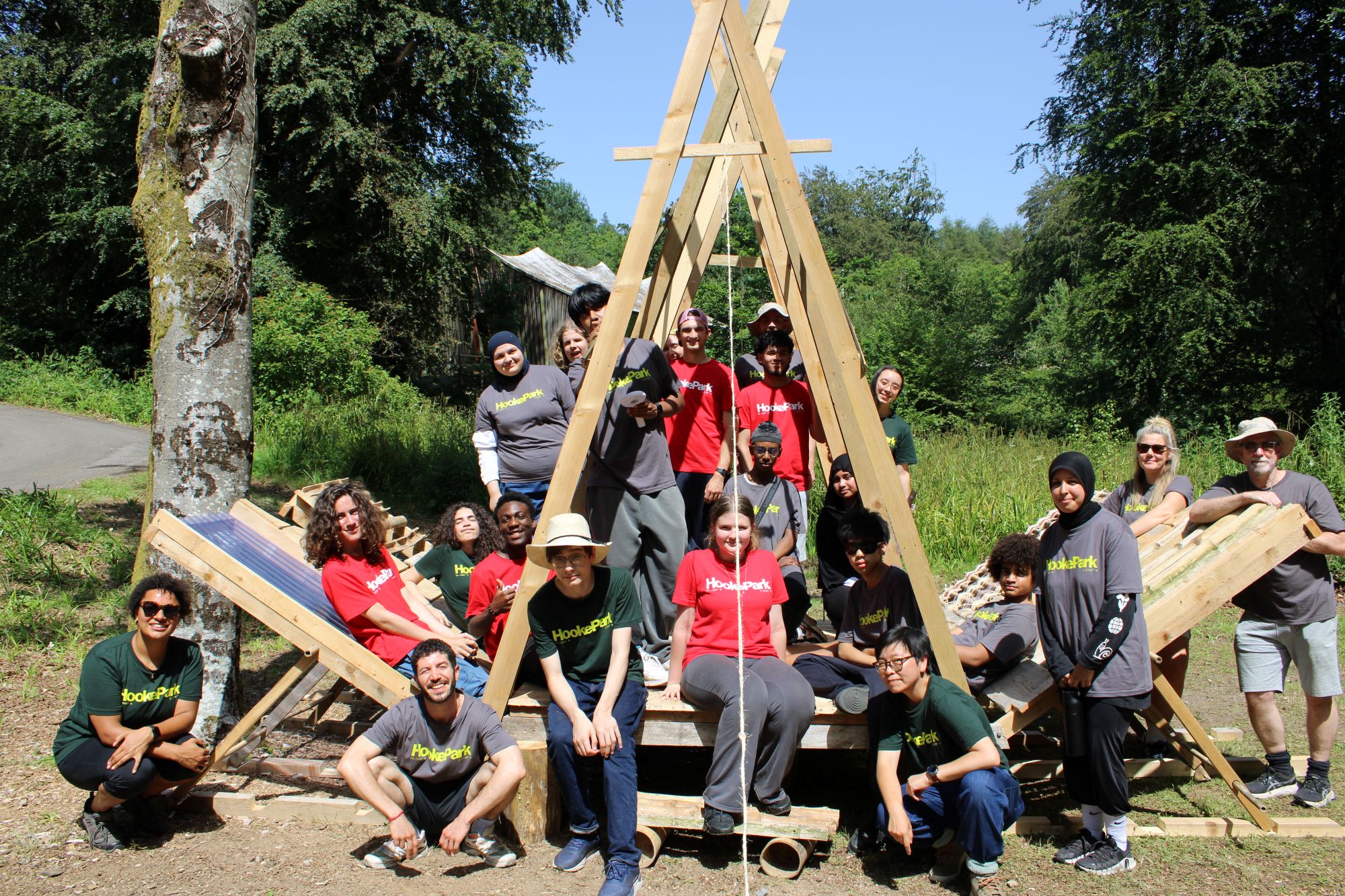
In June 2026, the Grimshaw Foundation returned to Hooke Park, the Architectural Association's woodland campus in rural Dorset, for the second year of its residential design programme. Fifteen students from three London secondary schools spent four days there, working from a brief by Sir Nicholas Grimshaw to design and build a treehouse, with a stargazing platform at its heart.
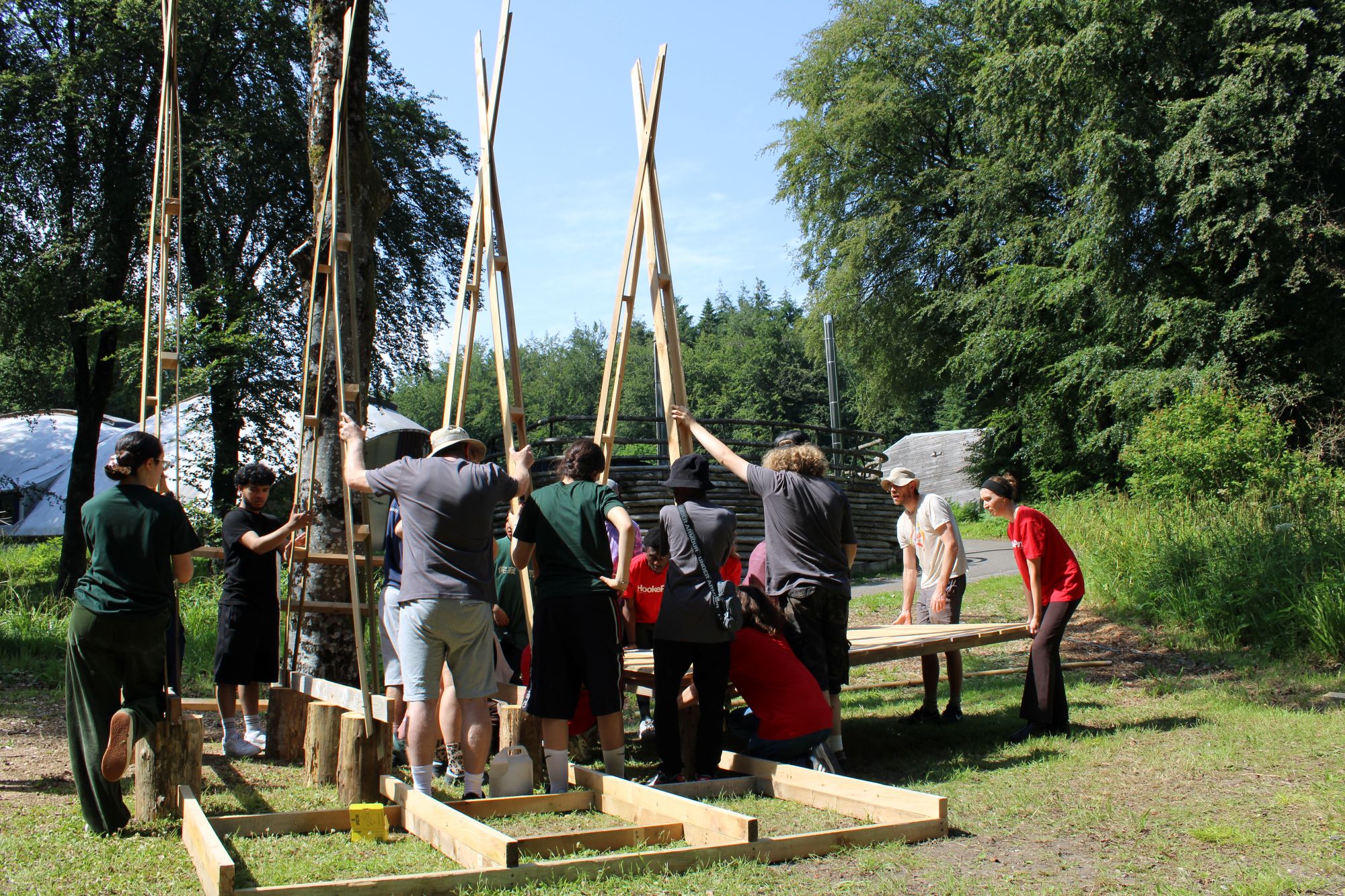
The students arrived with no shared plan and, between them, fifteen different ideas of what a treehouse might be. The early part of the programme was spent turning that open brief into a single buildable design, a process that meant sketching, listening, and thinking out loud together.
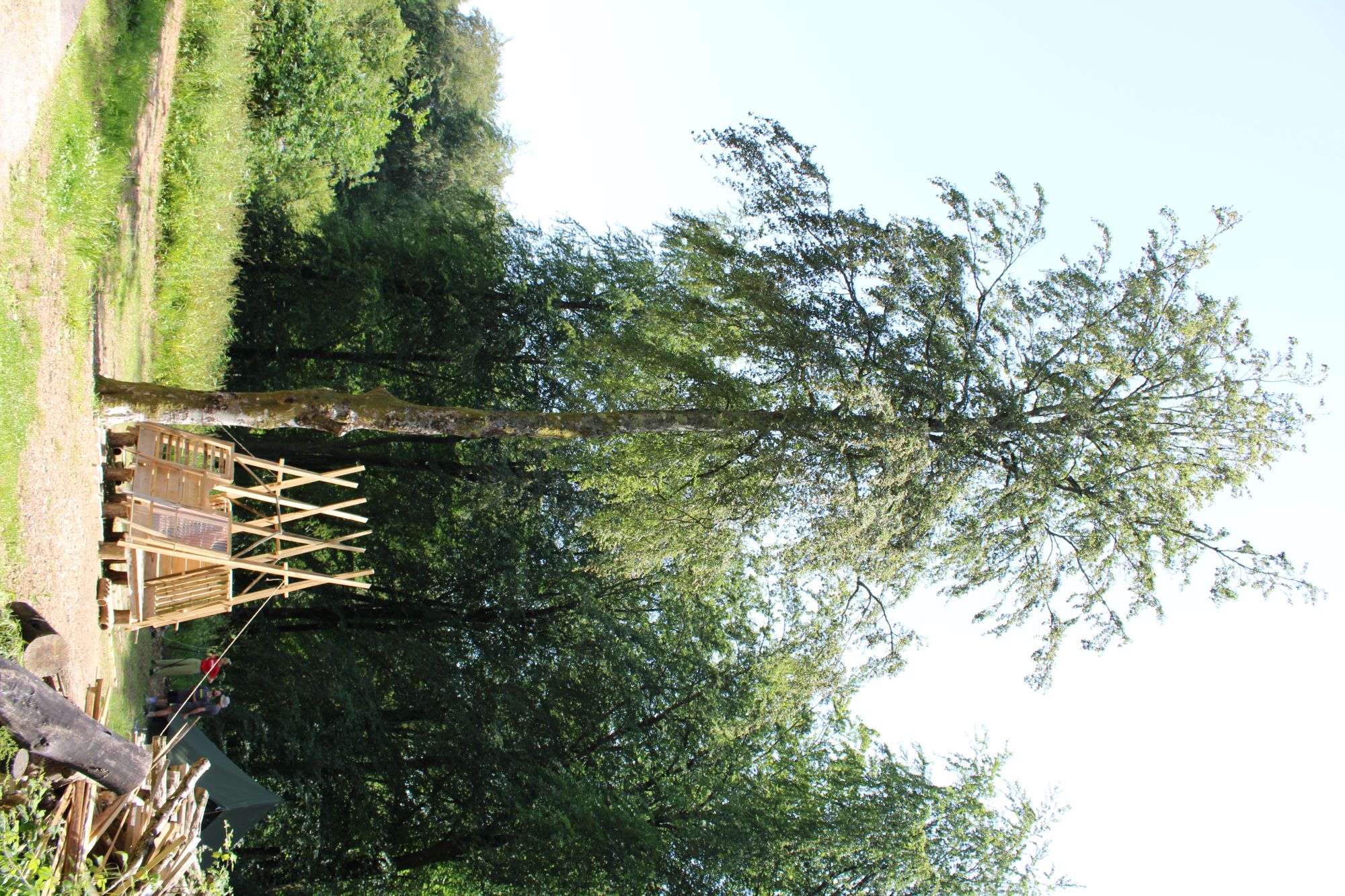
The first real decision was where to build. The group weighed a sloping site against the flat ground beside the campsite, and each option was talked through on its merits, with students making their case, explaining their reasoning, and weighing up the alternative before the group settled it together. They chose the flat site beside the two bell tents, where their structure would stand among them like a third tent.
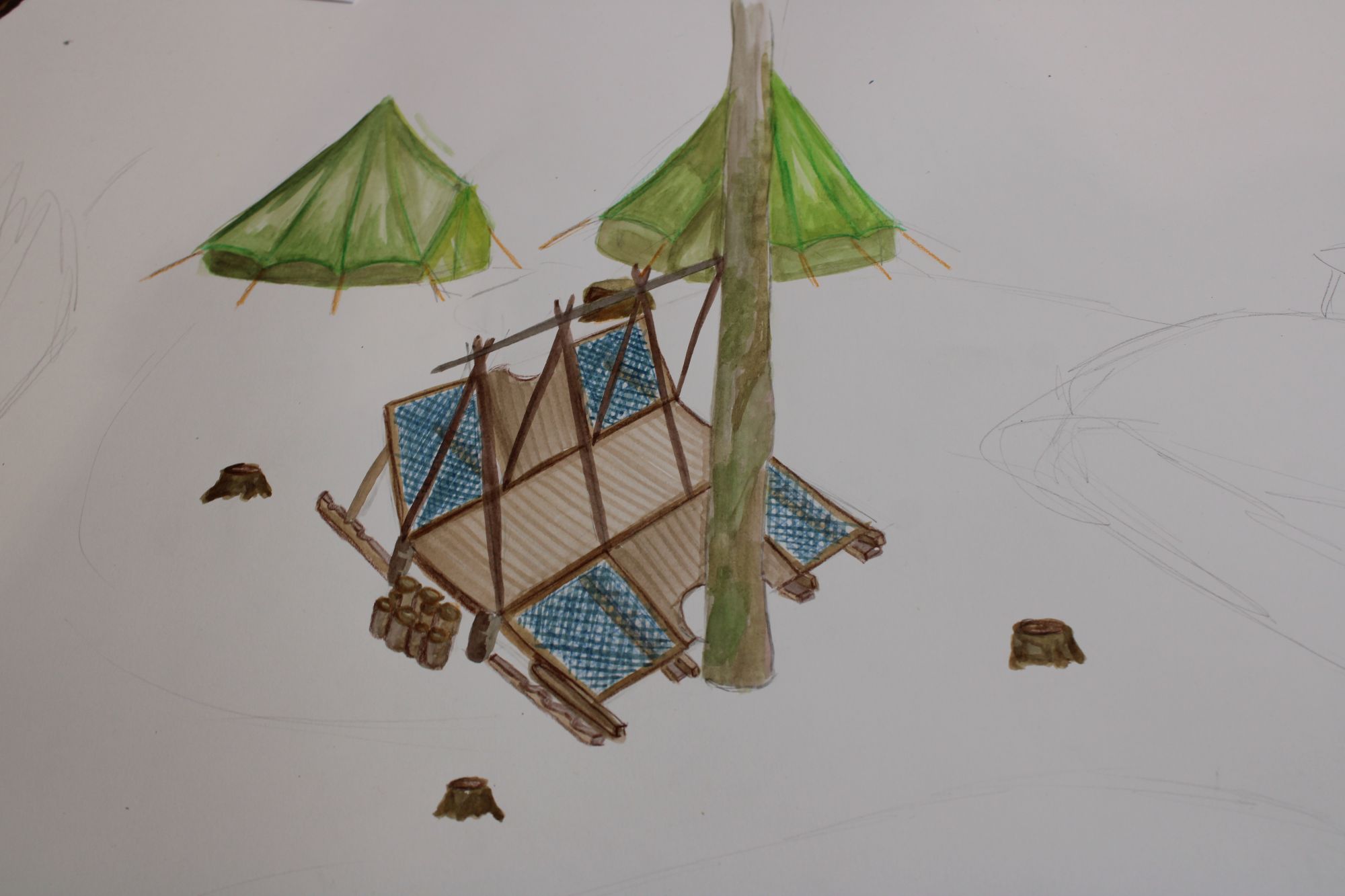
After multiple iterations we were able to converse and collectively implement different elements of design from each person.
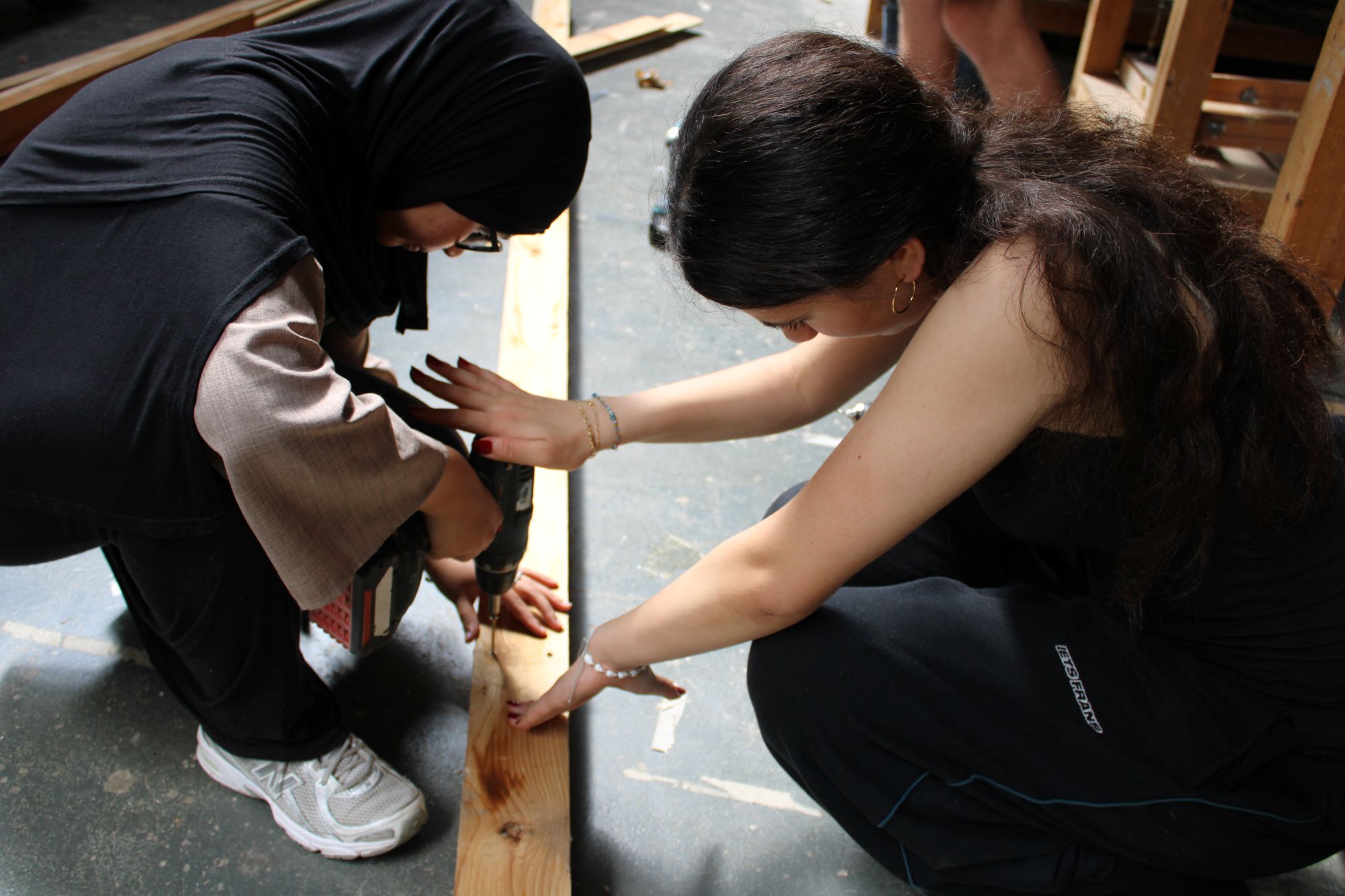
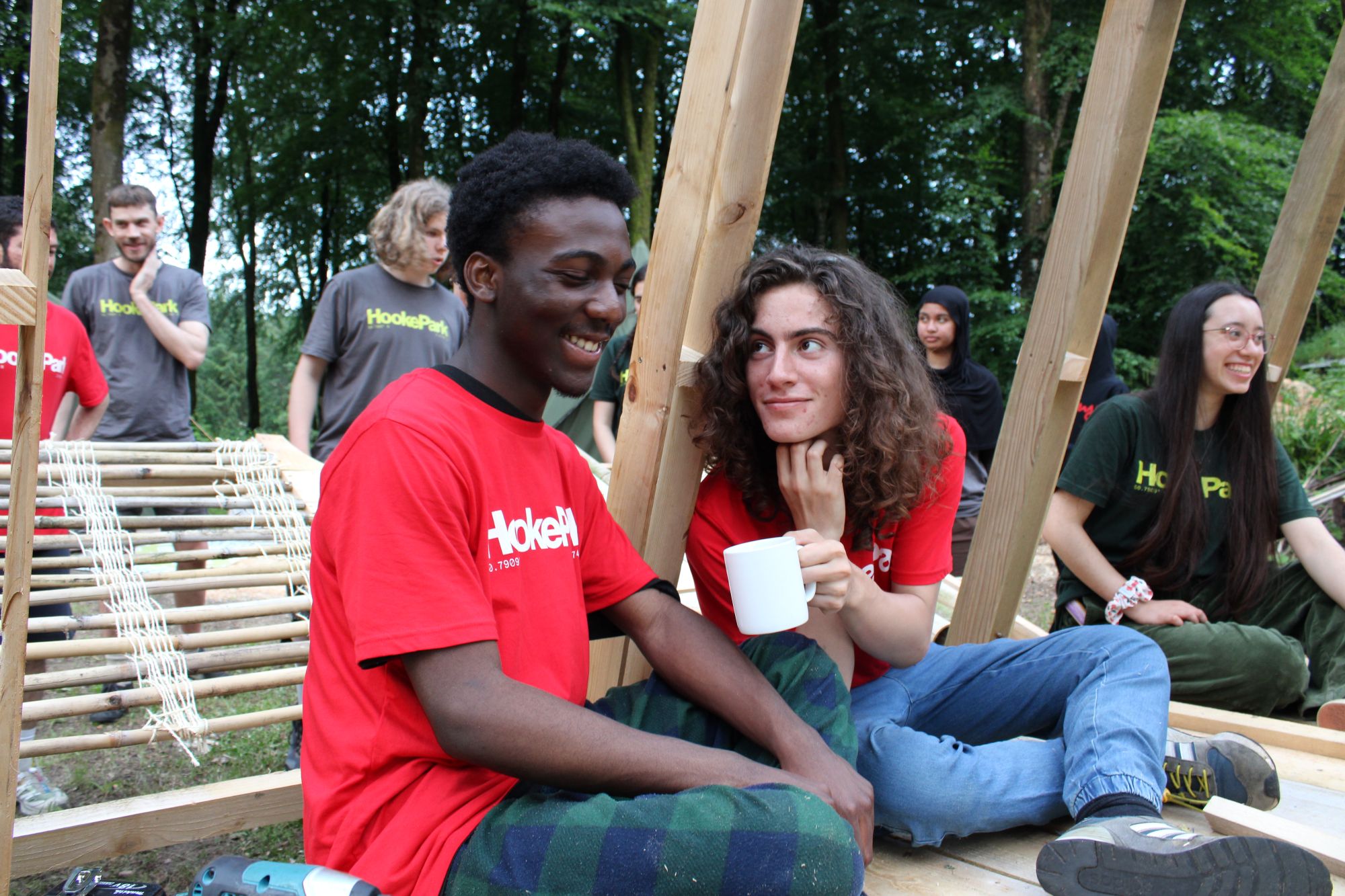
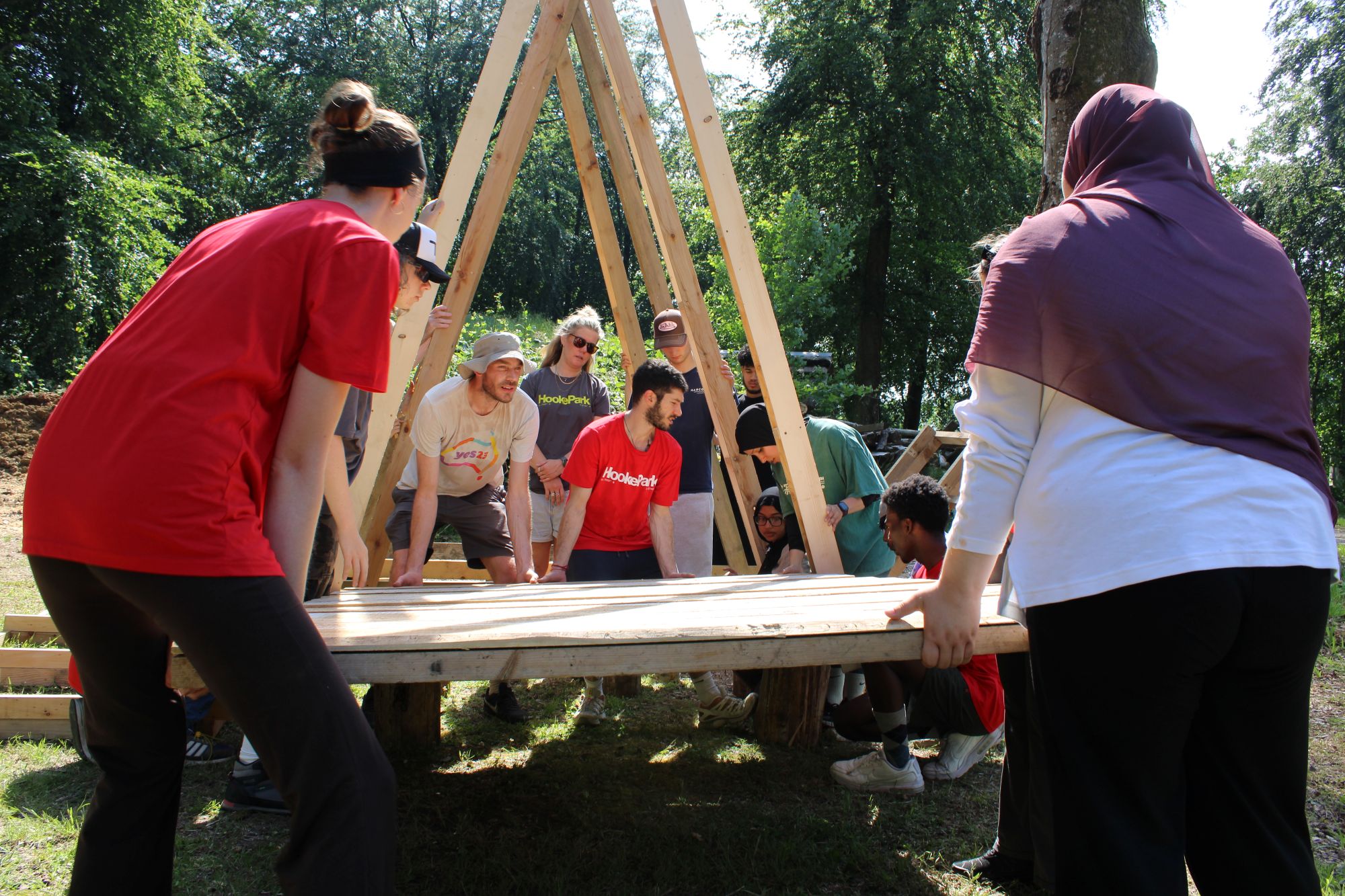
We even found a way to make drilling in a screw a team effort.
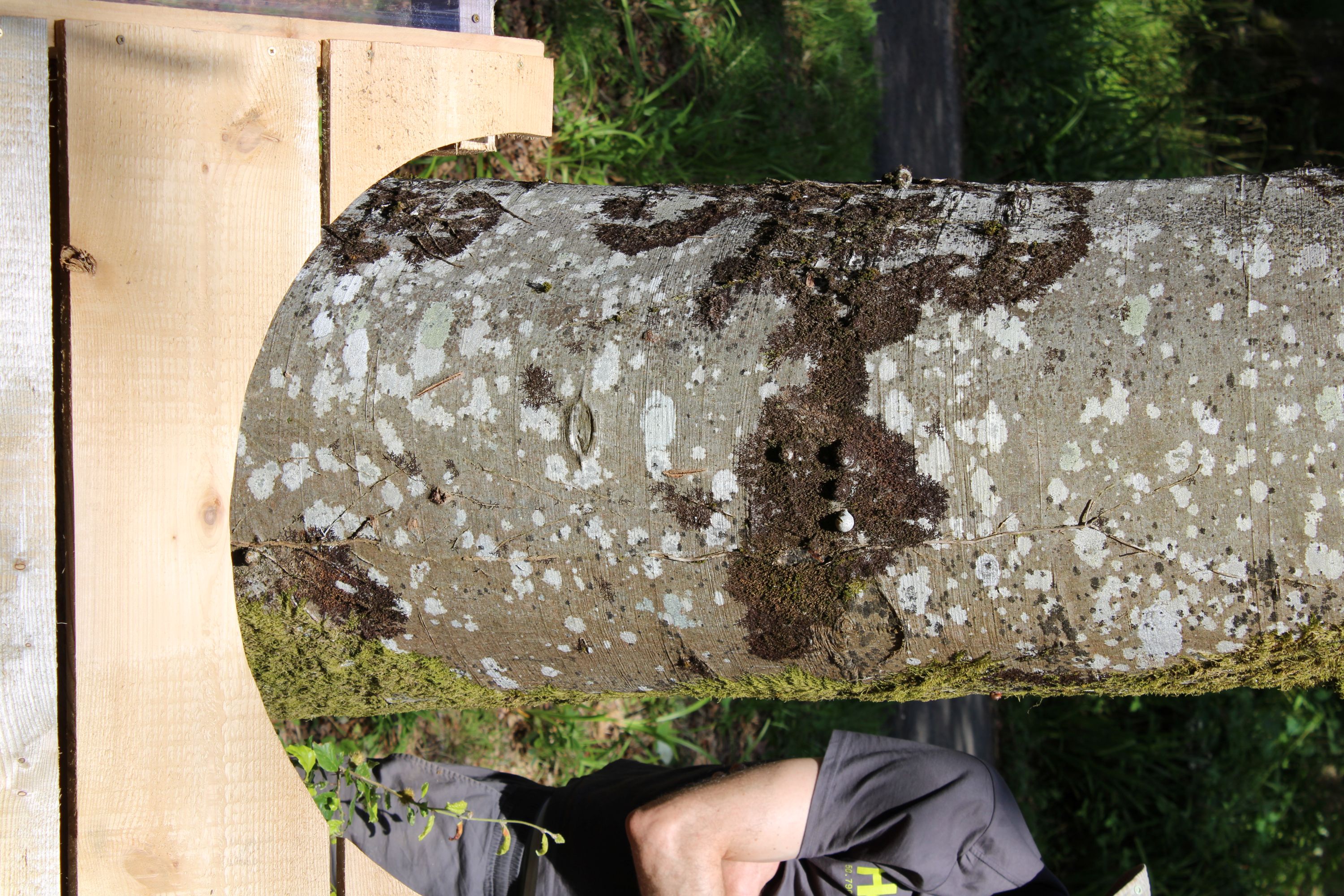
The design they arrived at made the most of that setting. The structure was built to fold: opened up, it let those inside lie back and look straight up at the stars; folded down, it gave shade from the sun. And rather than work around the tree on the site, the students made it part of the design, shaping a cut-out into the folding element so it could close neatly around the trunk, sitting against the tree and interacting with it without ever damaging it.
From there, the fifteen separate visions were gradually folded into one. One suggestion, to standardise a repeated component so it could be reproduced rather than made from scratch each time, helped make the structure achievable in the days available. What emerged was a design none of them could have drawn alone, and which each of them could point to as partly their own.
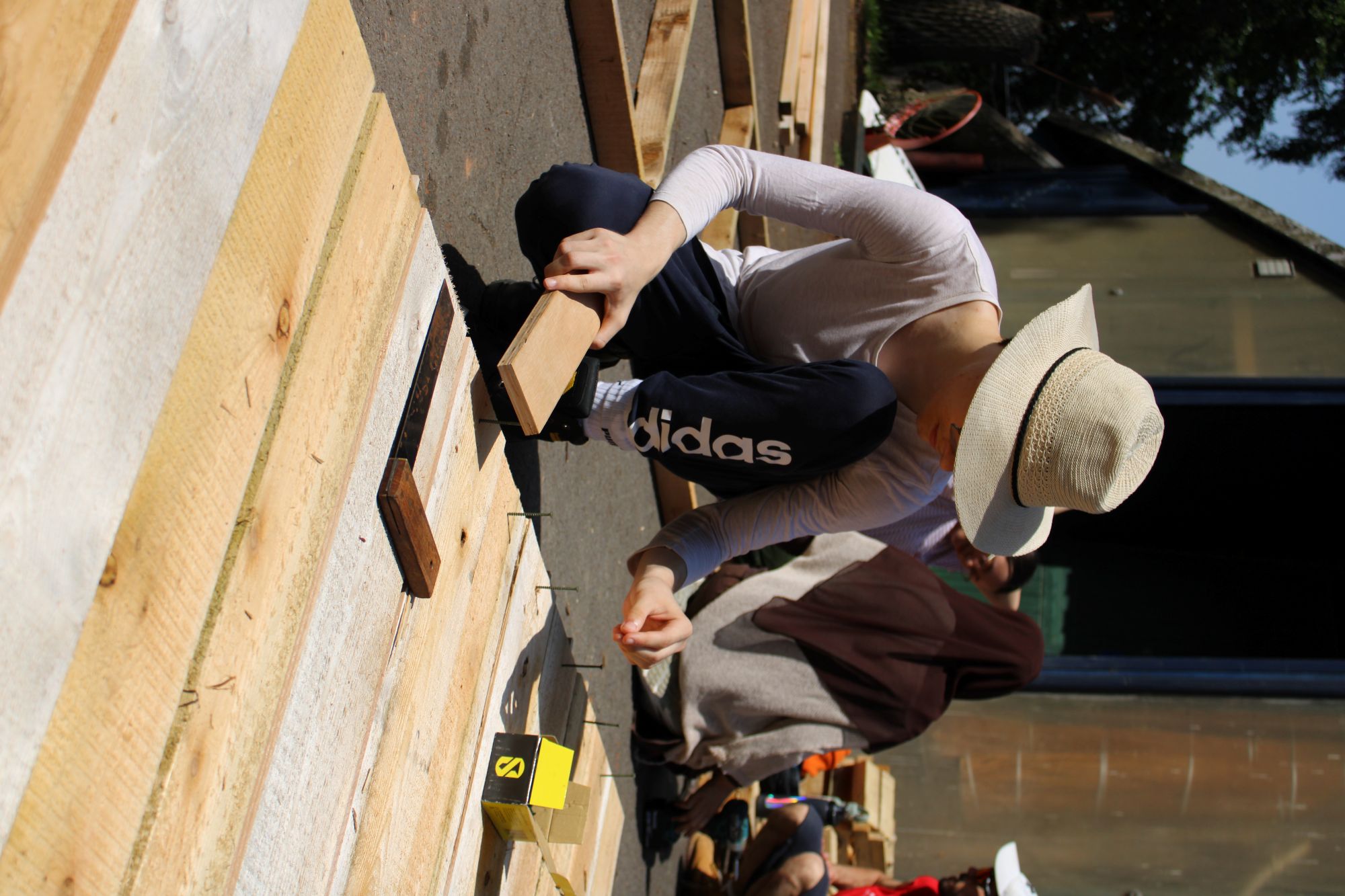
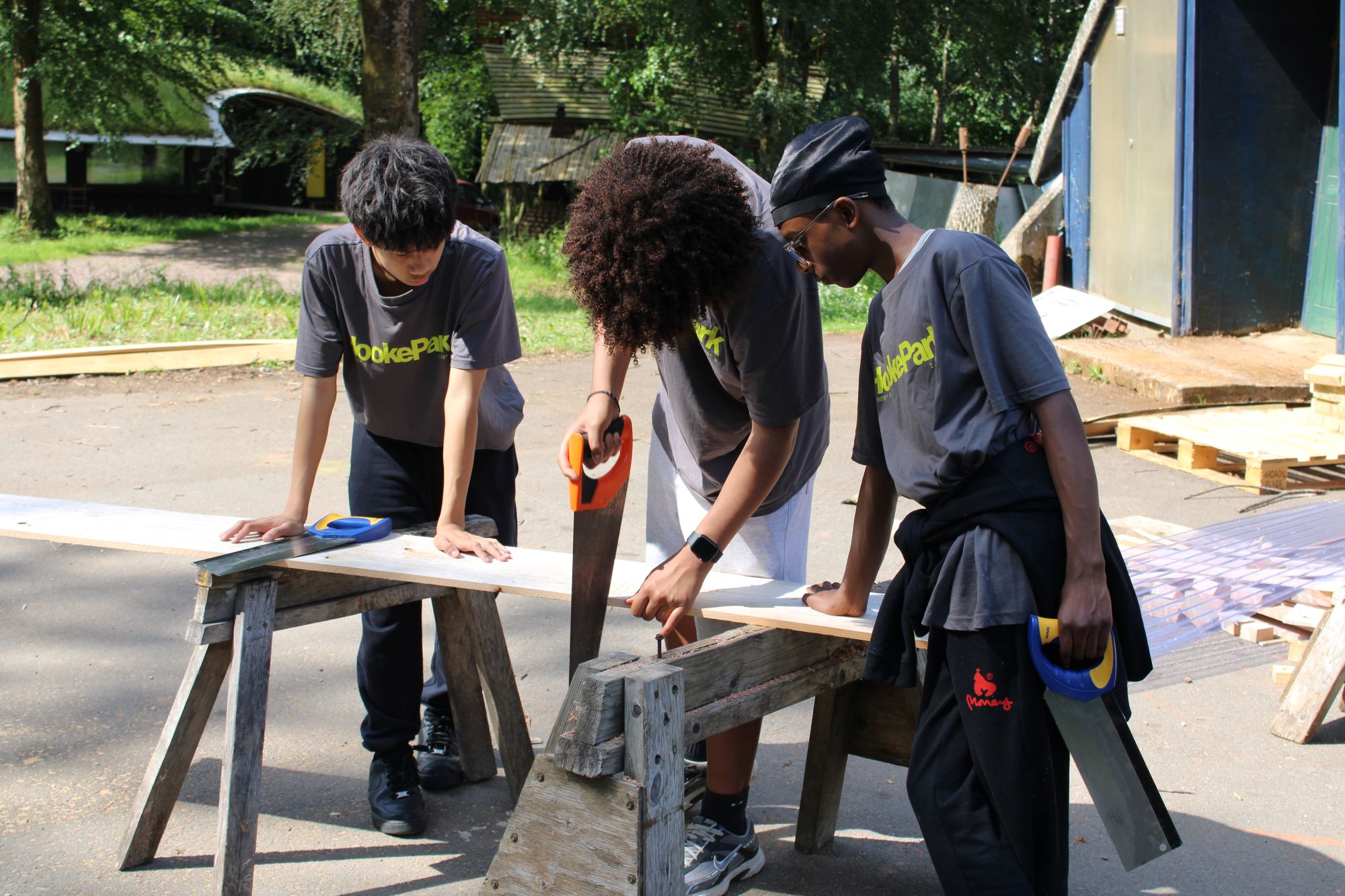
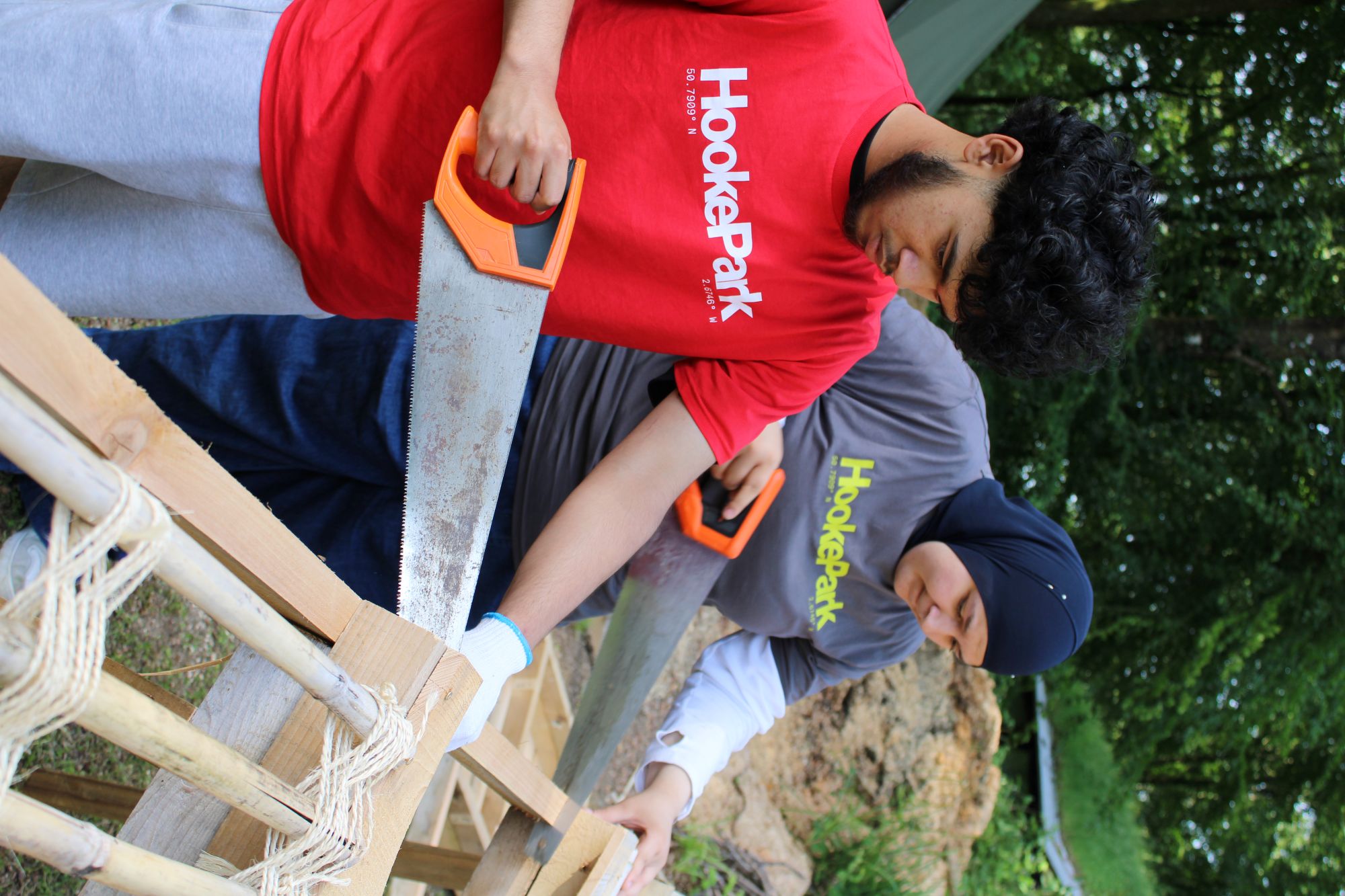
Then came the making. With no prior construction experience between them, the students learned on the job: drilling and sawing, cutting notches to seat the beams, screwing joints for strength, weaving, and turning to bamboo where the raw timber did not suit.
As the structure went up, the design kept developing to meet what the students were finding in front of them. When a beam proved too weak, they added more. When the frames needed stiffening, they introduced cross-braces. When the timber ran short, they resized the platform rather than give up on the design. When the folding side panels needed a fixing point for their hinges, they extended the panels, which solved the problem and strengthened the structure at the same time. Each change was a decision the students reached and carried out themselves.
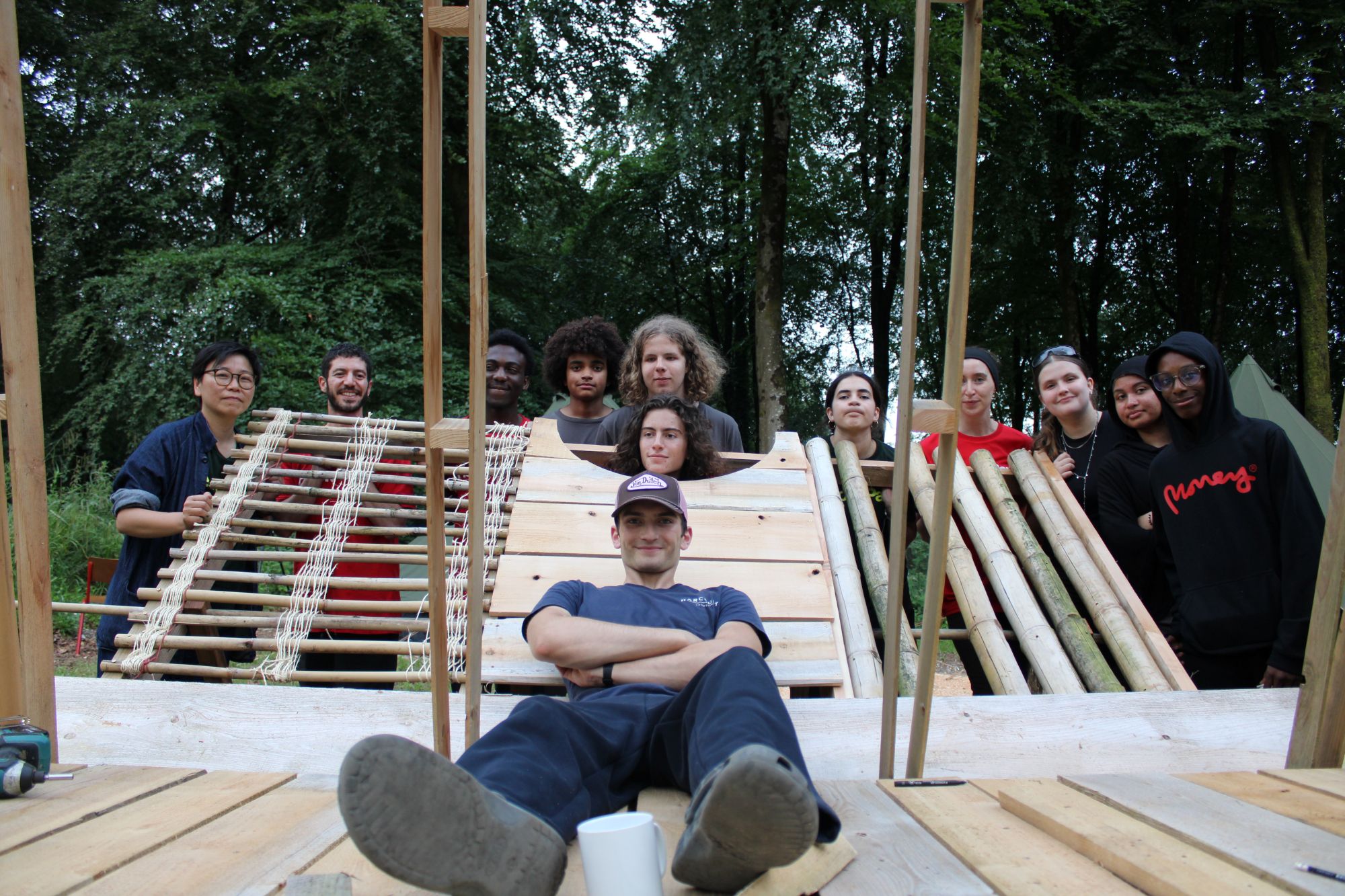
I feel very proud. We brought our vision to life and used teamwork in the process
Teamwork was the thread running through the whole build. By dividing the work according to what each of them was good at, they found that even the smallest task went faster together, one person steadying a component while another drilled, a job that had been, as one student put it, "nearly impossible" alone.
The main structure was completed on the final night, which allowed students to experience the true purpose of their build – to gaze up at the stars. The students gathered and played music, laying back to watch the stars come out over the woodland. One student even brought out his guitar and had a jam session under the dark glow of moonlight. Asked afterwards for the most rewarding moment of the four days, more students named this than anything else.
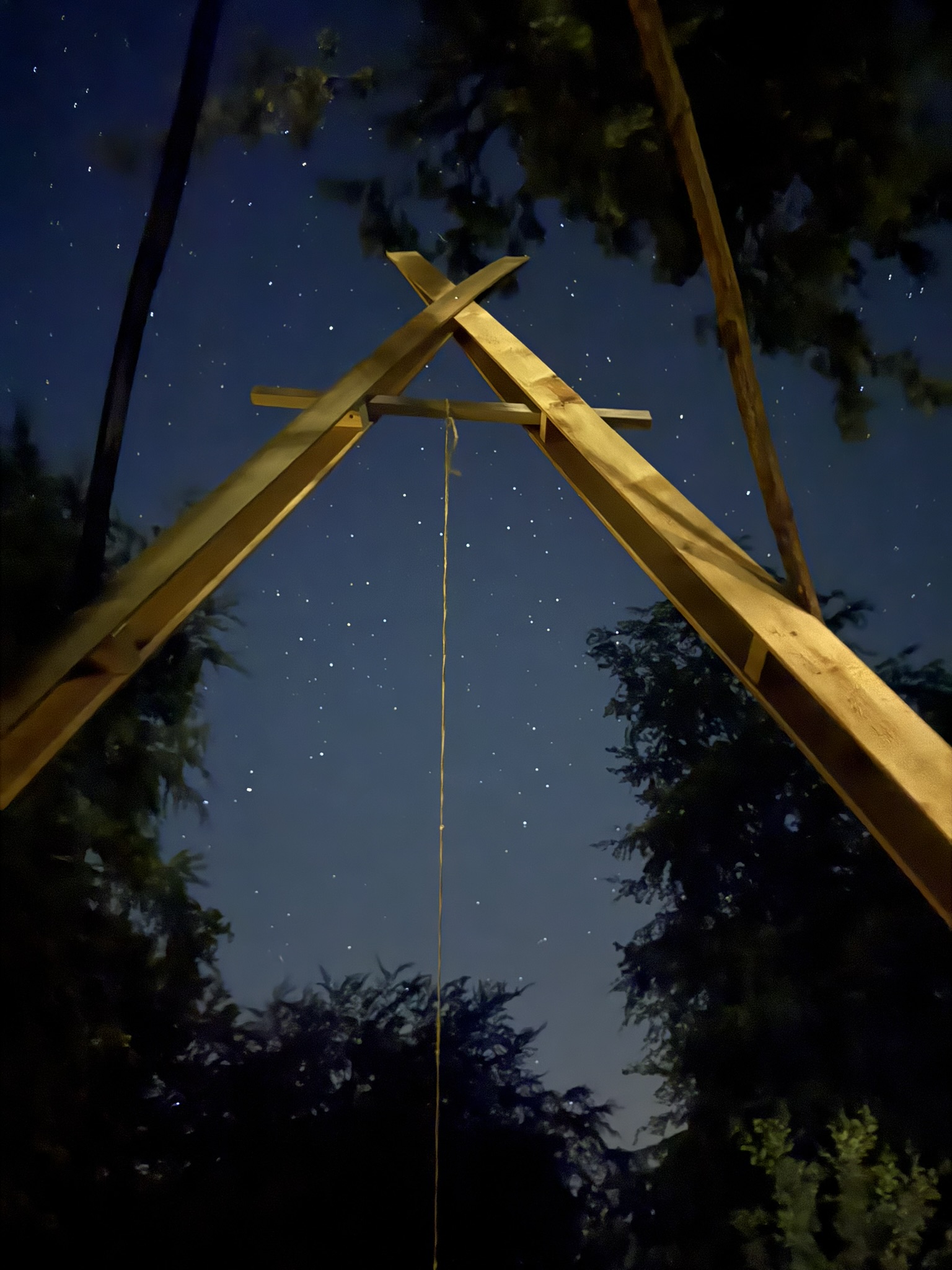
Stargazing and singing songs in a group on the platform | Stargazing with new friends by our build at midnight. | Very satisfying and peaceful, especially since we went at night and stargazed.
The clearest outcome was confidence, the sense, as one student put it, of having "achieved the impossible." Many left with a changed sense of direction, towards architecture, engineering, design and technology, or simply a wish to keep building.
What the students carried home went well beyond a set of practical skills. In four days they had taken an idea from a blank page to a structure sturdy enough to lie back on and watch the stars – and had discovered what it feels like to make something real with their hands, and alongside other people. Almost all of them pointed to the same lesson as the one that would stay with them: that ambitious things are built by people who listen to one another, adapt, and share the work.
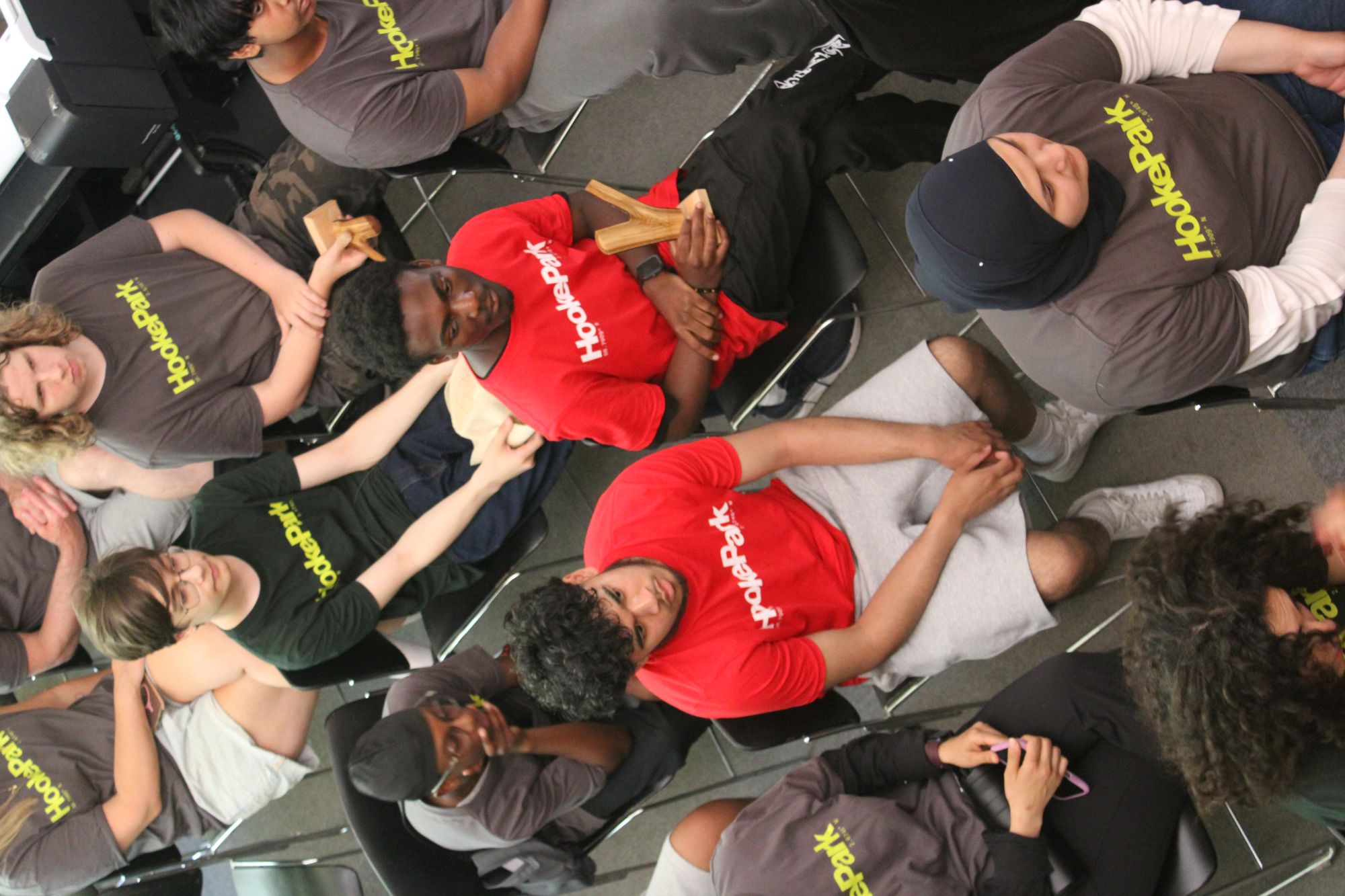
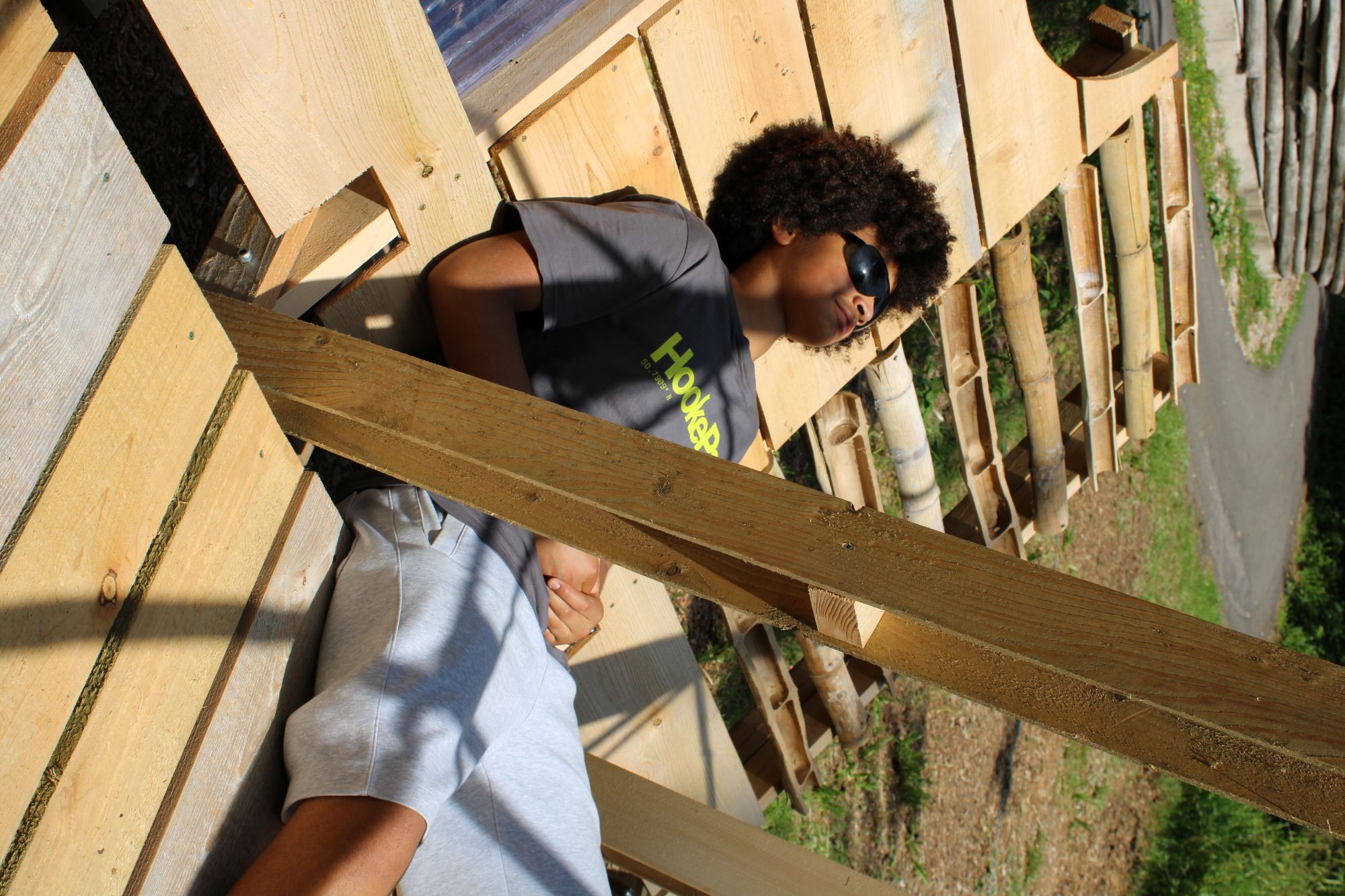
It has made me more excited for a creative career.
The programme was led by Grimshaw Foundation volunteer Wynne Leung, with fellow Foundation volunteers Neo Christou, Patrick Brewin and Katie Van Dorssen. They were supported by the Hooke Park team – Kate Davies, Head of Hooke Park; Emmanuel Vercruysse, Head of Physical Production; and Charlie Corry-Wright, Wood Workshop Manager – who supplied the tools, timber and technical supervision that kept fifteen young builders safe and moving throughout. As in previous years, the structure was made largely from materials drawn from the surrounding woodland.
The Grimshaw Foundation remains committed to broadening access to design education and to offering young people transformative experiences in the built and natural environments.