The ‘Girl’ Bedroom: Self-invention and the Digital Age
Ambie Drew sat down with Grimshaw Foundation to explore themes from her recent exhibition, Soft Bodies, Cold Machines, commissioned by 'arebyte Digital Art Centre.'
Your bedroom can be a space where your identity is shaped: an intimate space filled with signals of your persona. In Ambie Drew’s Soft Bodies, Cold Machines exhibition, she showcases artworks in a ‘girl bedroom,’ using it as a metaphor for internet culture and exploring the impact that AI, trends, and algorithms can have on gender.
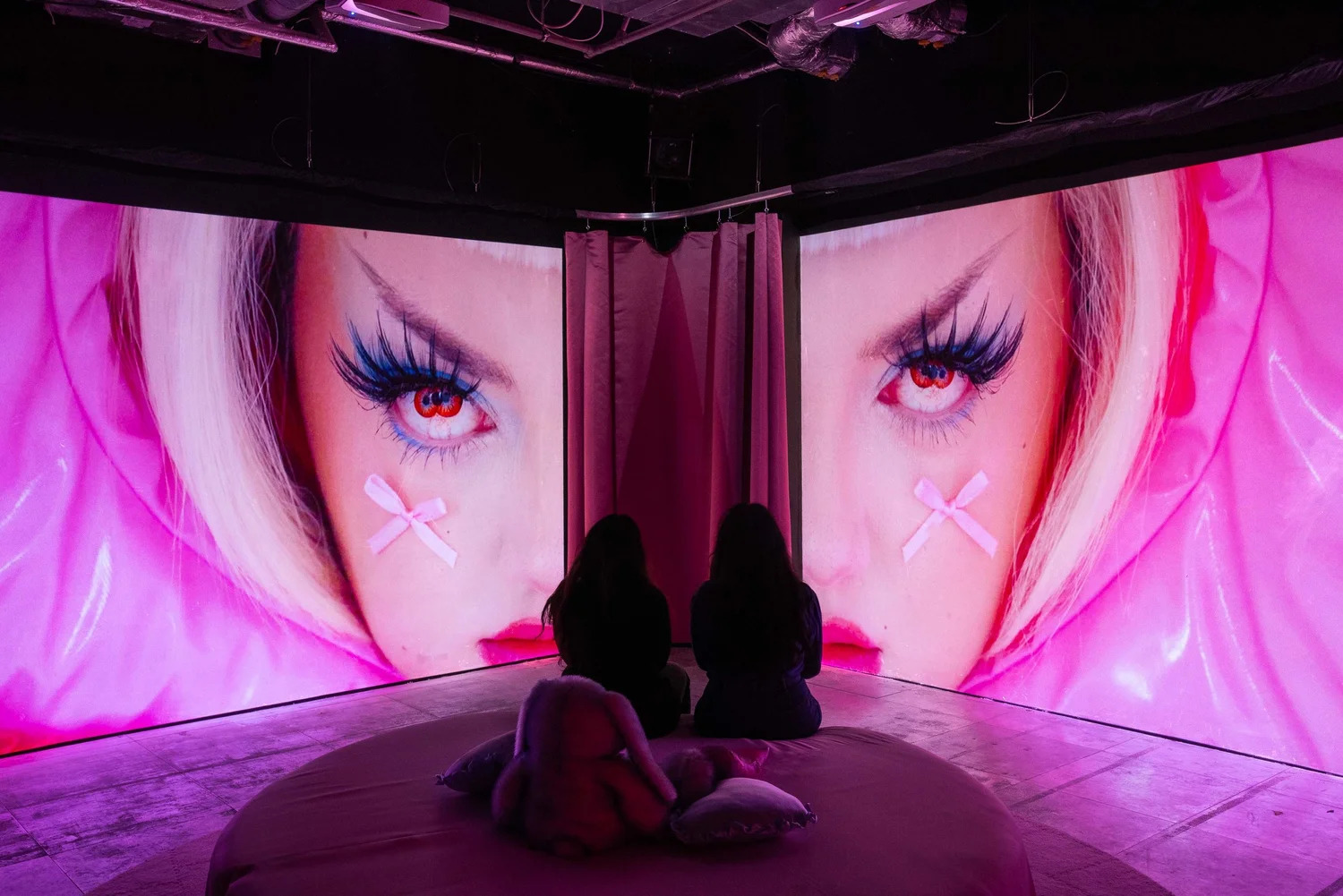
Ambie Drew is a multidisciplinary British artist based in Worcester. Her practice interrogates how digital consumerism can shape the construction of gender and female identity online. Working across moving image, sculptural installation, and text, Ambie adopts a hyperfeminised alter ego to explore the consequences of living in a heavily mediated world where the physical and digital exist in constant flux. Her work reflects on how intimacy, memory, and reality are entangled with internet culture and machine-driven desire.
I sat down with Ambie to hear more about her exhibition, commissioned by 'arebyte Digital Art Centre.'
NMR: A girl’s bedroom is almost like a character in your exhibition. What role do you think that space plays in shaping a young girl’s identity?
AD: I think the bedroom is the first space of self-invention. It's where you experiment with your identity and figure out who you are, and it can feel like a physical manifestation of your inner world.
Growing up, I felt like this is where I could begin to be myself. You can make the space your own through the objects you collect and the things you surround yourself with, which become a reflection of who you are.
But as soon as I started to use the internet, those external pressures started to come in. I need to look a certain way, be a certain way, speak a certain way. So I think the bedroom becomes this space where you're not only figuring out who you are, but also negotiating all these ideas about what you should be.
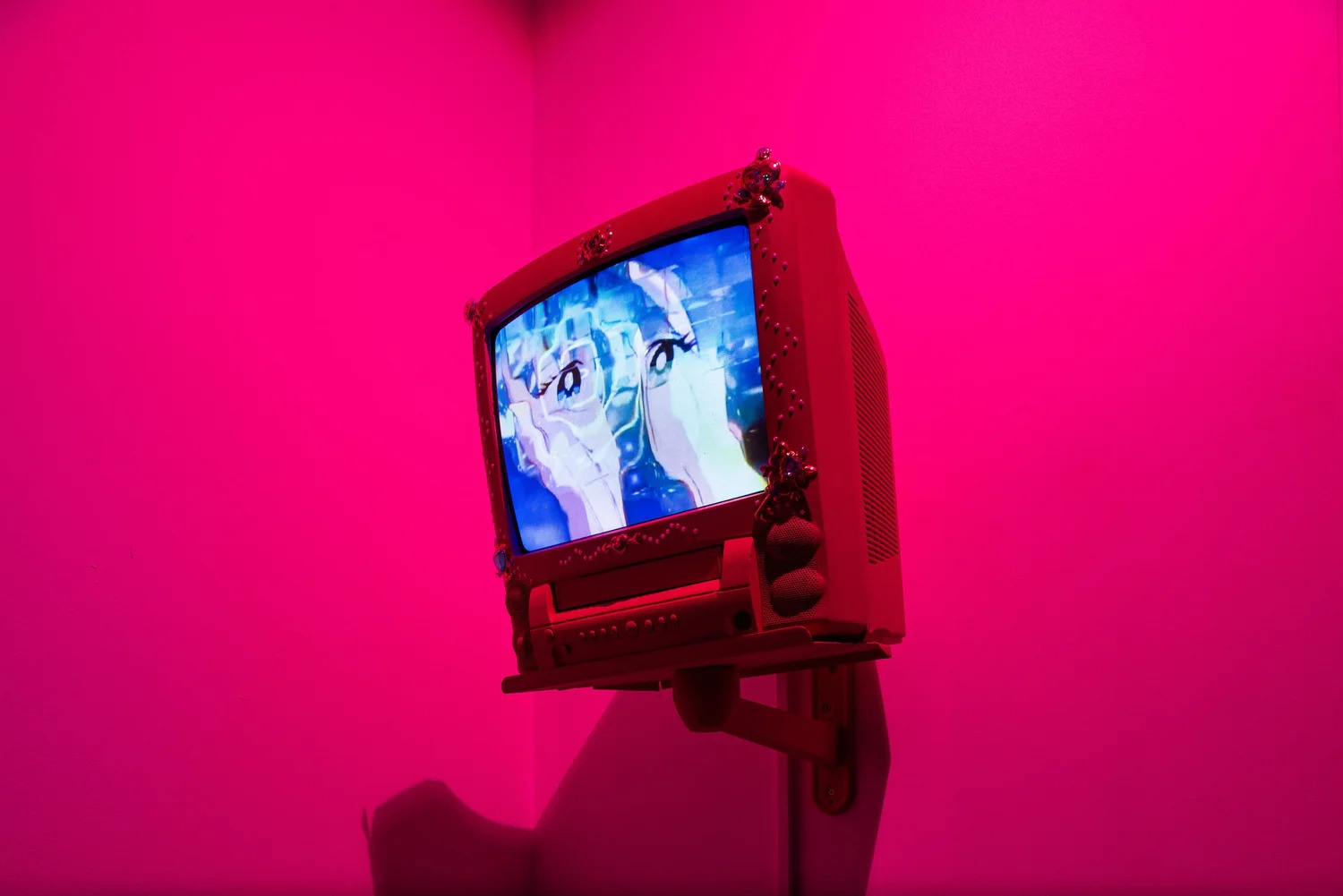
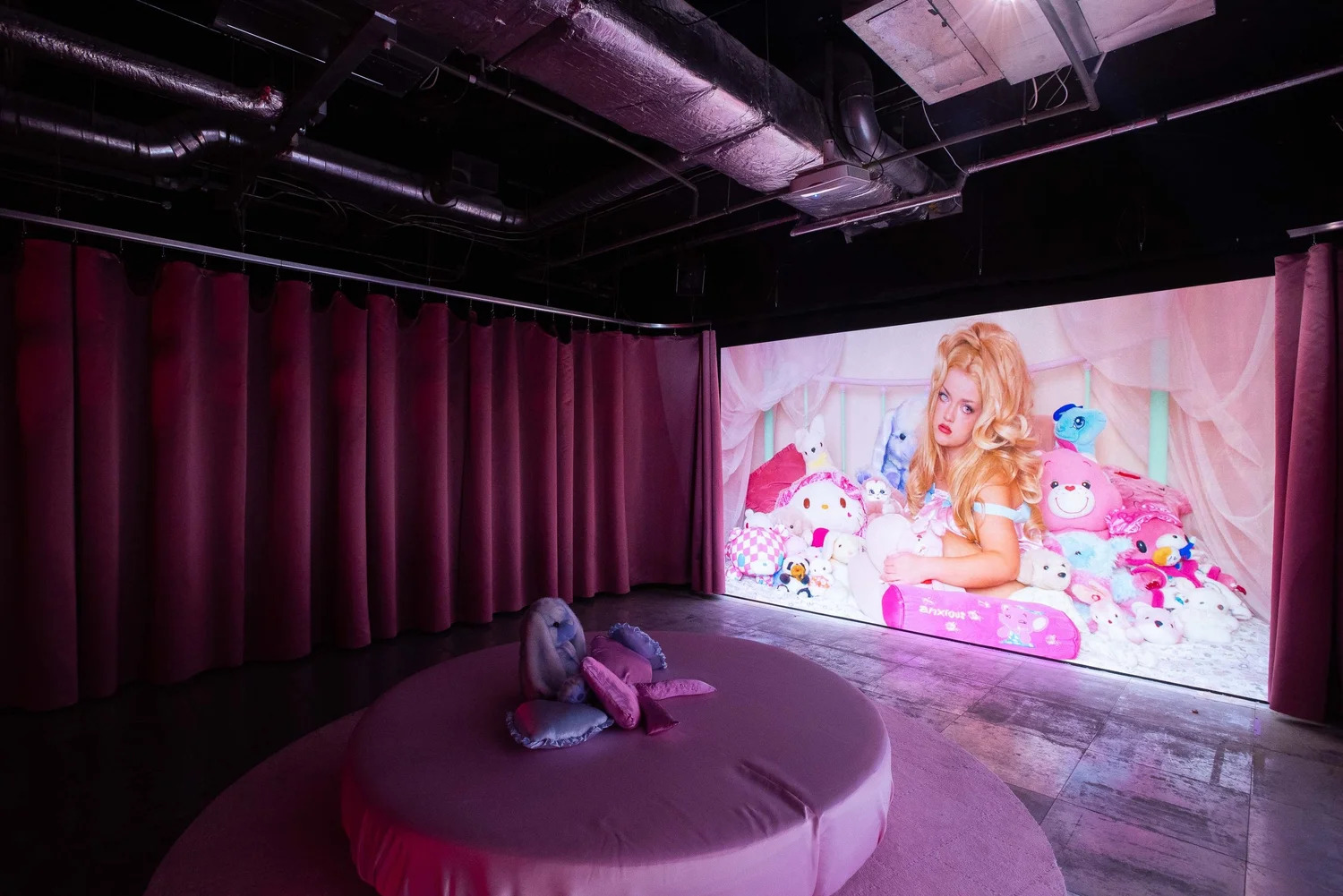
The old CRT TV evokes the memory of a 90s, 2000s bedroom, while Girl Altar is a very obvious reference to the girl bedroom and its trinkets. Memory Palace is like a monstrous amalgamation of the girl bedroom, almost like a body, but also a bed with screens.
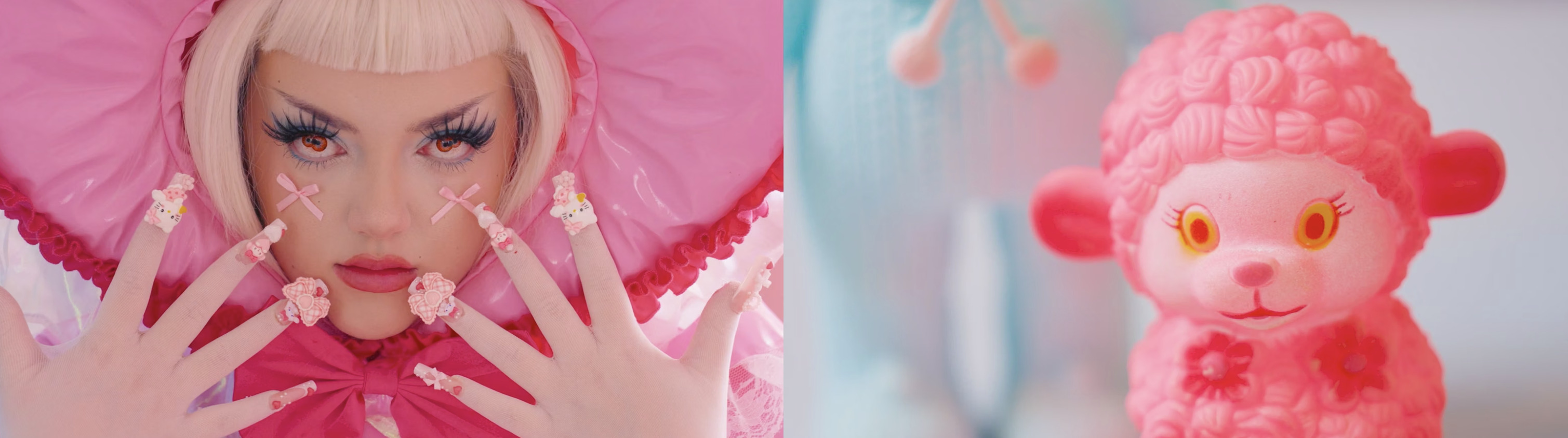
NMR: Your hyper-feminised alter ego features in your Soft Bodies film. How did you go about creating her, and what does she represent?
AD: I use Ambie Drew as my artist name now, but to me, I'm just Amber. Ambie Drew was one of the first usernames I ever had online, from MSN to Bebo and MySpace.
I've always had this obsession with taking images of myself and transforming myself into something I can't be in real life. Being very exaggerated, almost too cute, and leaning into it until it becomes slightly grotesque.
I've basically been doing that since I was a teenager, being what I felt I couldn't be in real life through the internet. So Ambie Drew became a way of exploring that version of myself.
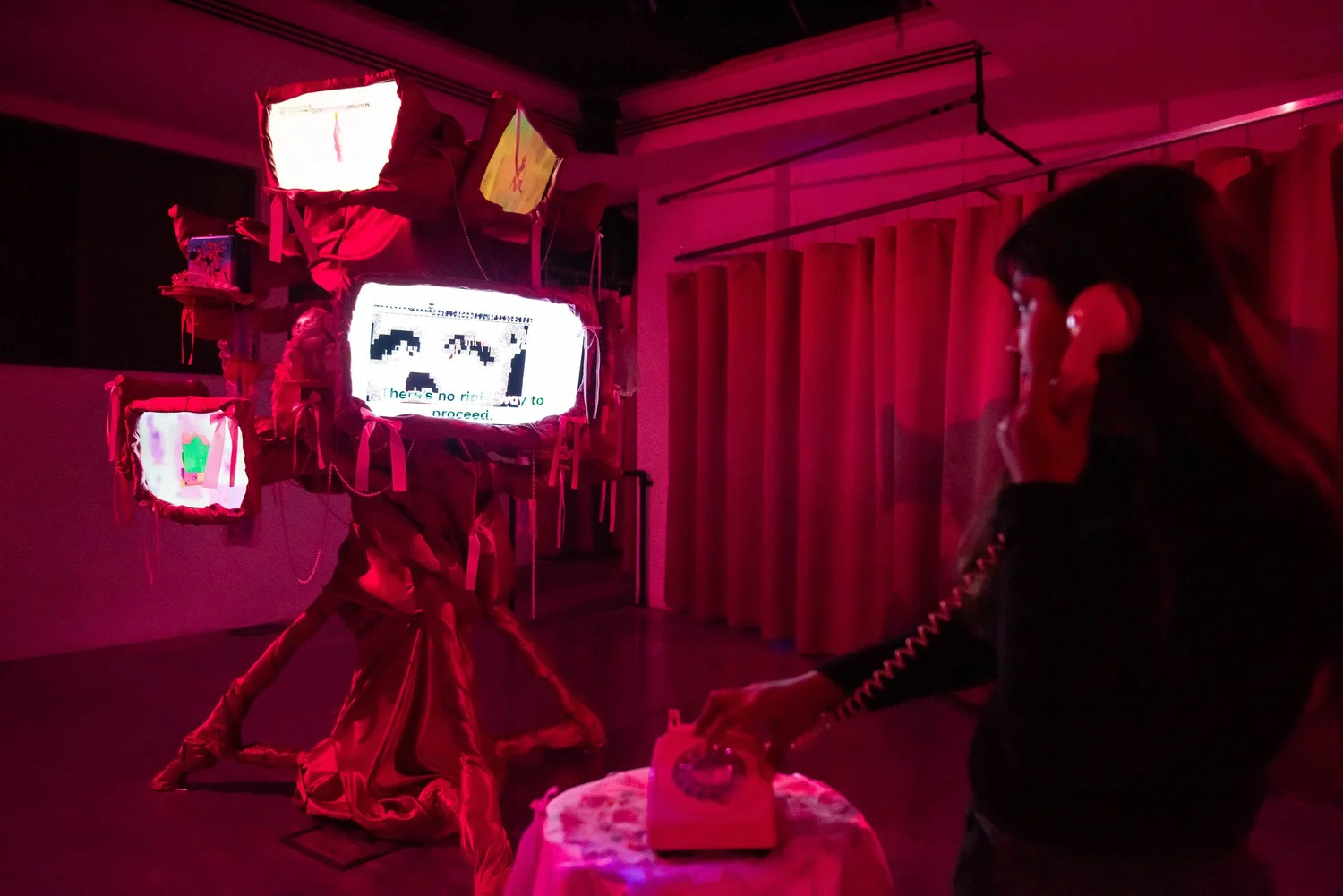
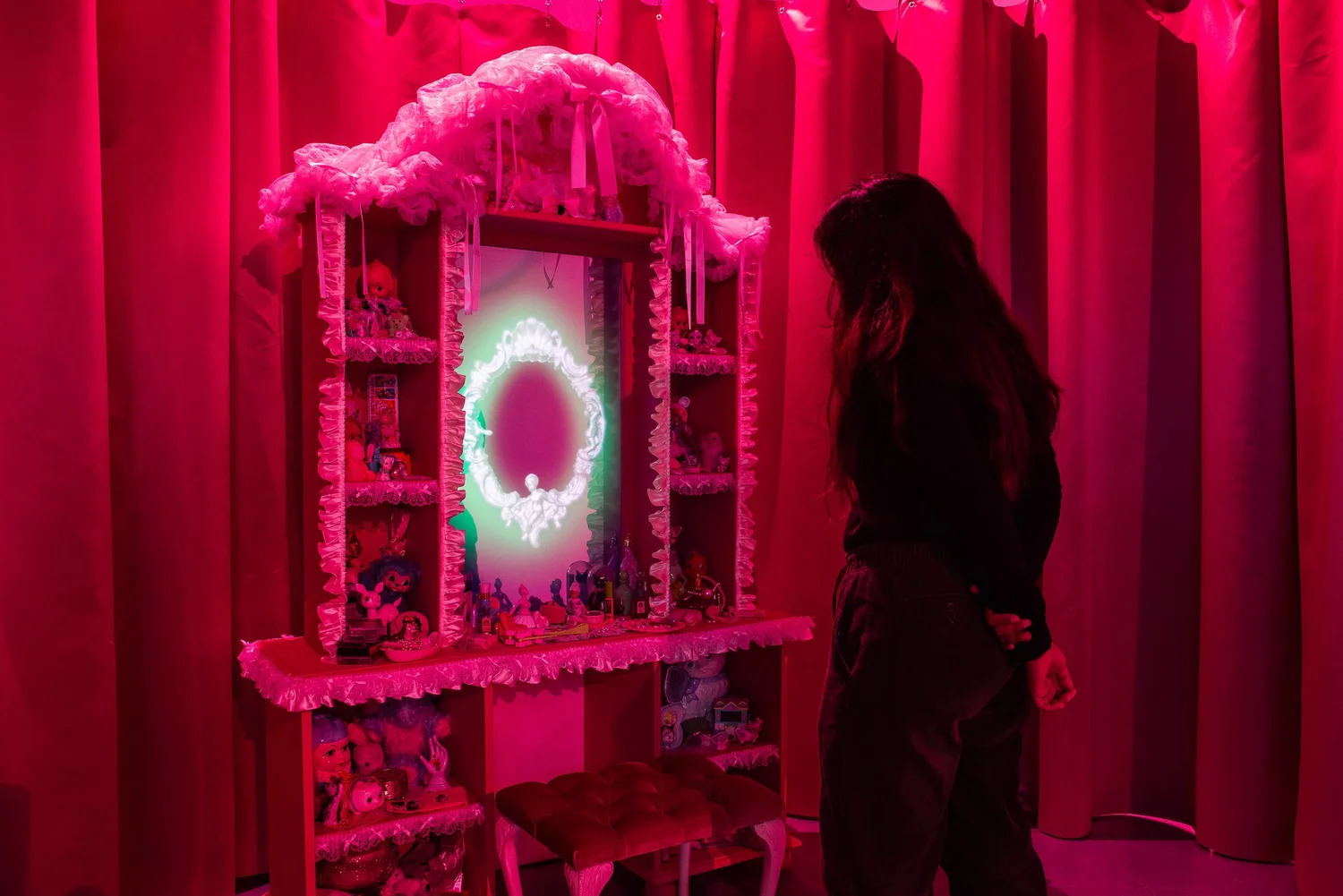
NMR: Both Memory Palace and Girl Altar feature older forms of media, like VHS cassettes, alongside newer technologies such as smartphones and AI. What is the significance of bringing these together? Do you think AI is changing the way young girls shape their identities, and if so, is its influence wholly negative?
AD: I like that old and new technologies aren't actually that different. When we first got the family computer, it felt like, whoa, what is this, how do we grapple with it? I think AI feels a lot more scary and terrifying than that.
As a young girl growing up on the internet, having unfiltered access had its effects. We could have built a new world where we could be whatever we wanted, but we're still falling within these same systems of gender stereotypes. I think AI makes that even more pervasive.
From a societal point of view, I think it puts more pressure on young girls to optimise themselves. It can be used to experiment with identity, for better or worse, but I think it'll probably lean more towards the worse.
Like, the politics of it too. If you type into ChatGPT, "What's the ideal girl? What's the ideal woman?", I can imagine where it would lean: probably towards a slim, white, blonde ideal. We've always had that pressure, but it's even more pervasive now. There's just another stream feeding us an idea of what a girl is and what a girl should be. It has a huge bias. Most of these AI models have been made by men, white men.
“One is not born but rather becomes a woman.” - Simone de Beauvoir
NMR: The theme of metamorphosis appears in Annihilation Transformation, as well as the Soft Bodies film through the butterfly imagery. What does metamorphosis symbolise for you here?
AD: I think it’s about this constant state of becoming. When you’re a girl, I don’t think you arrive at a fixed identity. For me, it always feels fractured, like I’m never going to get to the bottom of it.
There’s a quote I always refer to: “One is not born, but rather becomes a woman.” When I refer to the girl in my artwork, I mean that in a very broad sense. You don’t necessarily have to have been born a girl to experience girlhood.
I think the butterfly is a good analogy for becoming a girl. You see a butterfly, and it’s beautiful, but it comes from something that has to dissolve itself completely first. You do have to dissolve yourself to a degree to become, particularly for my alter ego, Ambie Drew, and this excessive femininity.
The first piece, the TV, Annihilation Transformation, plays with the tension between destruction and creation, because I think that’s often what being a girl feels like. And in Soft Bodies, the butterfly imagery connects to that idea of transformation.
I think transformation can be quite violent, actually. Being a girl and becoming a woman is quite a violent experience.
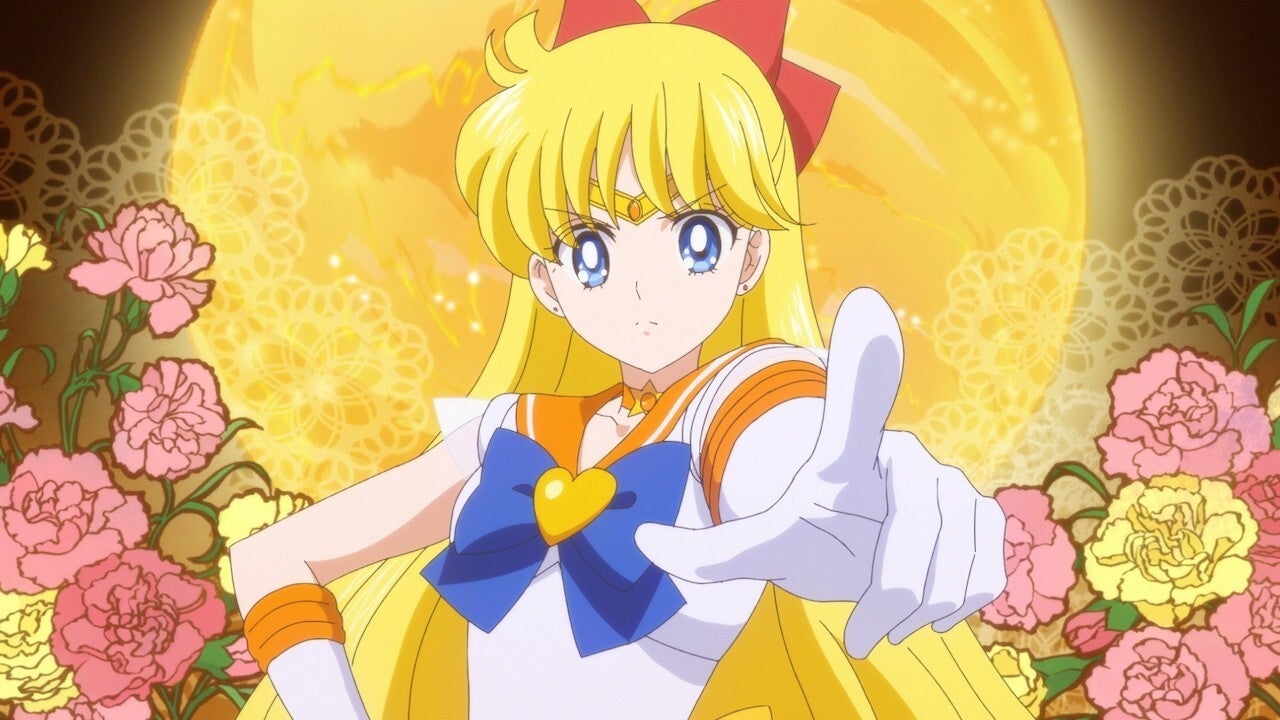
NMR: Sailor Moon is an iconic symbol of female empowerment and girlhood that appears throughout your work. What made you use her as a reference point, and what role do you think cultural icons play in young women's understanding of themselves?
AD: My earliest memory is watching Sailor Moon at my great-gran's house. I can remember being five years old, jumping around in a fairy costume. I think Sailor Moon formed part of my language of girlhood from such a young age.
She doesn't present femininity as a weakness. She's a very real teenage girl, but when she becomes Sailor Moon, she's a crime-fighting baddie, and she does it with her band of girls. I think she gave young girls a template for imagining themselves differently. We borrow pieces of those characters when we're figuring ourselves out.
The kitschy, hyper-pop element is very readable in my work, and Japanese culture has formed a massive part of my practice, both consciously and subconsciously.
NMR: Your Girl Altar features trinkets and objects that have shaped your memories and sense of self. What do these objects represent to you, and what do they say about the pressures of girlhood and consumerism?
AD: All the objects on Girl Altar are mine from my own personal collection. The Sailor Moon VHS tapes and Paramore CD are from different periods of my life. They're memory triggers, physical anchors to different versions of myself.
When I was preparing for the show, me and my younger siblings rooted through my childhood Wendy house, which was packed with old toys. It was such a nice way to reminisce about the past, and I think that's helped make the work accessible because people can see themselves in the objects.
But there's something insidious about girls' toys being surrounded by ideas of secrecy, beauty and entombment. What do these things signal to us about what we need to become?
Then there are the New Age beauty tools, which promise the world but don't actually achieve anything. We're encouraged to buy things to form our identities, buying into the idea of becoming an enlightened, beautiful version of ourselves.
NMR: Do you have a favourite piece in the exhibition, and what do you hope people take away from your work?
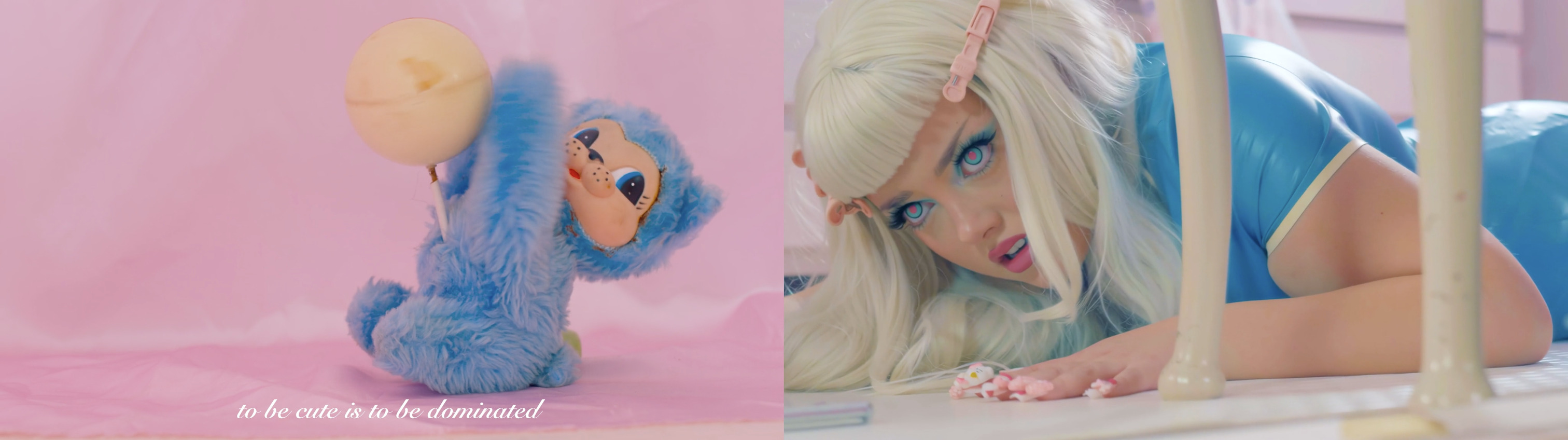
AD: If I had to pick, I'd probably choose the film. It brings the other works together, and I filmed it entirely by myself in my spare room. I didn't know the narrative until I finished editing it, but once it came together, I was really, really proud of it.
Ultimately, I want people to resonate with the work and question what it means to be a girl, their own identity, and their relationship with objects and beauty rituals. And for young people pursuing art, don't self-eliminate yourself. Advocate for yourself, persevere, and do things because you want to, not for the likes.